Views: 98 Author: Site Editor Publish Time: 2026-01-20 Origin: Site


In the metal processing industry, a sheet metal leveling machine plays an indispensable role in restoring flatness and preparing materials for downstream operations such as stamping, cutting, and welding.
If you are evaluating a precision leveler, flattening machine, or straightening machine, understanding how each component affects performance is essential. This in-depth guide from ZHONGAN Leveler explains the key structural elements of a modern leveling system and how they work together to deliver superior flatness.
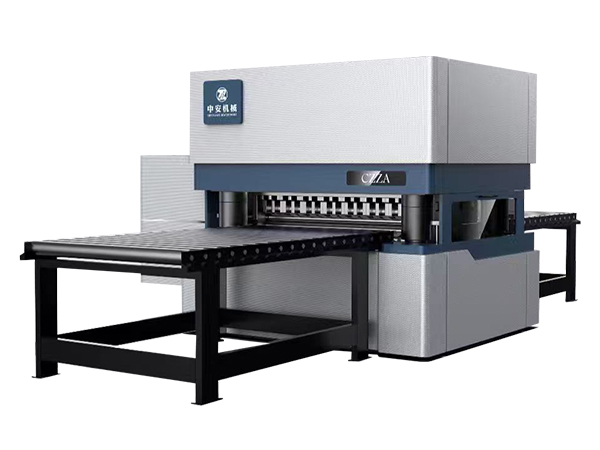
The frame is the fundamental support structure of the sheet metal leveling machine and must provide exceptional strength and rigidity. It is typically fabricated from heavy-duty welded steel and treated with stress-relief processes to eliminate internal stresses.
This ensures that even under long-term, high-load operation, the frame remains stable and maintains the high precision required for consistent leveling performance. ZHONGAN Leveler utilizes premium materials and advanced welding techniques to ensure long-term durability and reliability.
The leveling roll system is the heart of any precision leveler. It consists of multiple work rolls arranged in alternating upper and lower banks.
These rolls are manufactured from high-hardness, high-precision alloy steel and undergo advanced processes such as:
Quenching
Tempering
Precision grinding
This enables the flattening machine to repeatedly bend metal sheets without damaging the surface.
To prevent deflection under high leveling pressure, larger-diameter backup rolls are integrated to support the work rolls. This ensures consistent flatness accuracy across different materials — from thin coils to thick plates — making the system equally effective for both flattening machine and heavy-duty straightening machine applications.
The pressing mechanism, typically hydraulic or servo-electric, controls the roll gap and leveling force.
By precisely adjusting the pressing amount, the machine can adapt to different material thicknesses, strengths, and processing requirements. This makes it one of the most critical factors influencing the performance of a sheet metal leveling machine.
ZHONGAN Leveler integrates high-response servo control systems to achieve smooth, accurate, and repeatable adjustments.

The drive system provides the operating power for the sheet metal leveling machine. It typically includes:
High-power electric motors
Gear reducers
Gear distribution systems
Universal couplings
Modern systems often use AC motors combined with variable frequency drives (VFDs), enabling precise speed control, high torque output, and energy-efficient operation.
The motor output is reduced through the gearbox, distributed through the gear system, and transmitted via universal couplings to the leveling rolls. This drives the rolls to rotate and pull the material through the precision leveler, completing the leveling process efficiently and reliably.
The control system acts as the “intelligent brain” of a modern flattening machine or straightening machine. It typically consists of:
PLC (Programmable Logic Controller)
HMI (Human-Machine Interface)
Operators can easily set parameters such as:
Material type
Thickness
Yield strength
Target flatness
The system also provides real-time monitoring of machine operation.
Advanced sheet metal leveling machine solutions may include closed-loop feedback systems, such as:
Flatness measurement systems
Tension sensors
These systems continuously collect real-time data and automatically adjust parameters like roll pressure and speed, enabling adaptive leveling. This significantly improves both accuracy and productivity — a key advantage of ZHONGAN Leveler equipment.

40 Series Hydraulic Precision Leveler

63 Series Hydraulic Precision Leveler

80 Series Hydraulic Precision Leveler

160 Series Hydraulic Precision Leveler
Installed at the entry and exit of the precision leveler, the guiding device ensures that the material remains centered and stable throughout the leveling process.
It prevents deviation or skewing, which could negatively impact leveling quality.
These systems include:
Infeed roller tables
Outfeed roller tables
Pinch rolls
The infeed system smoothly introduces material into the flattening machine, while the outfeed system transfers leveled sheets to the next stage.
Pinch rolls maintain consistent tension and ensure synchronization with machine speed.
Depending on production requirements, additional equipment can be integrated with the sheet metal leveling machine, including:
Shearing machines (cut-to-length processing)
Recoilers (coil rewinding)
Stacking systems (finished sheet collection)
ZHONGAN Leveler can provide complete leveling lines with integrated auxiliary systems to improve efficiency and automation.
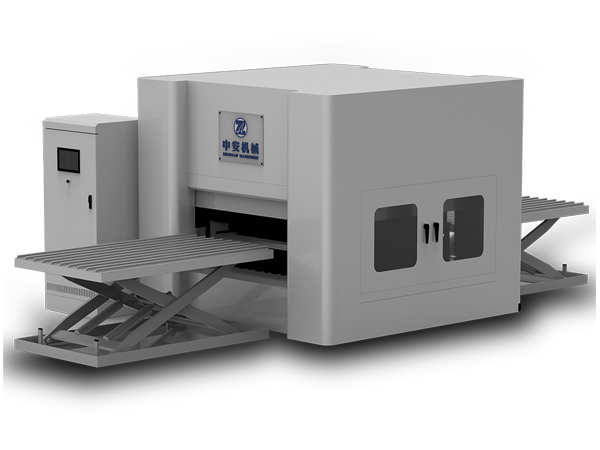
The performance of a sheet metal leveling machine is ultimately determined by the interaction of its leveling roll system, drive system, and control system.
Understanding these key components — from the frame and roll assembly to intelligent controls and auxiliary equipment — helps you make better decisions when selecting, operating, and maintaining a precision leveler, flattening machine, or straightening machine.
With advanced engineering, intelligent control, and high-quality materials, ZHONGAN Leveler delivers reliable solutions designed to maximize productivity and ensure superior flatness.
Contact ZHONGAN Leveler today to learn how our leveling systems can enhance your metal processing operations.


