Views: 98 Author: Site Editor Publish Time: 2026-05-07 Origin: Site


In modern metal processing, flatness is a critical quality indicator that directly impacts downstream performance, assembly accuracy, and overall production efficiency. Whether you are working with automotive panels, aerospace components, or construction materials, achieving consistent flatness is essential.
If you are looking to understand how a sheet metal leveling machine works — and how to choose the right precision leveler, flattening machine, or straightening machine — this guide will provide a complete overview.
As a professional manufacturer, ZHONGAN Leveler delivers high-performance leveling solutions designed to meet the evolving demands of global industries.
The primary function of a sheet metal leveling machine is to eliminate defects such as waviness, coil set, twisting, and bending that occur during rolling, cutting, transportation, or storage.
This is achieved by applying controlled pressure and bending moments to the metal sheet or coil, redistributing internal stress.
A precision leveler typically consists of multiple leveling rollers arranged in upper and lower rows. As the material passes through these rollers, it undergoes repeated alternating bending. When the stress exceeds the material’s yield strength, internal stresses are released and rebalanced.
As a result, the material exits the machine in a flat and stable condition. This fundamental process is the basis of all flattening machine and straightening machine technologies.

A high-quality sheet metal leveling machine is composed of several critical systems, each contributing to performance, durability, and precision.
The roll assembly is the core component of any precision leveler. The rollers are typically made from high-grade alloy steel or tool steel, with surfaces treated through quenching and precision grinding to achieve high hardness and wear resistance.
The arrangement and spacing of the rolls can be adjusted according to material thickness and leveling requirements, ensuring optimal results.
The drive system powers the leveling rollers, allowing them to rotate and transport the material through the flattening machine.
It generally includes:
Electric motors
Gear reducers
Couplings
This system provides adjustable speed and torque to accommodate different materials and processing conditions.
The support system maintains structural stability and ensures precision during operation. It includes:
Machine frame
Bearing housings
Tie rods
Constructed from high-strength cast iron or welded steel, the system offers excellent rigidity to withstand leveling forces and maintain consistent performance.
Modern straightening machine solutions feature advanced control systems, typically using PLCs and touch-screen interfaces.
These systems allow precise adjustment of:
Roller speed
Roller gap
Leveling pressure
ZHONGAN Leveler integrates intelligent control technology to ensure accurate, stable, and repeatable leveling performance.

Automotive components such as body panels, chassis parts, and structural elements require high flatness. A sheet metal leveling machine ensures dimensional accuracy, improving assembly precision and product quality.
The aerospace sector demands extremely high precision. Precision leveler systems are used in manufacturing aircraft skins, wings, and engine components, ensuring compliance with strict standards.
Metal materials such as color-coated steel sheets and aluminum curtain wall panels must be flat for both aesthetic and functional purposes. A flattening machine ensures proper flatness, improving durability and installation efficiency.
In machinery production, components like worktables, enclosures, and guide rails depend on flat metal sheets. A straightening machine enhances quality and performance by ensuring precise flatness.
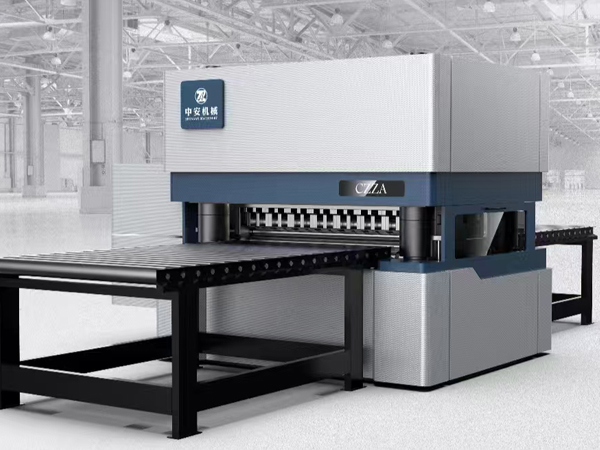
As industries demand tighter tolerances, sheet metal leveling machine technology continues to evolve toward higher precision. Advanced manufacturing processes and improved control systems will enable superior flatness performance.
Automation is transforming the industry. Modern precision leveler systems integrate sensors and intelligent control technologies to:
Monitor flatness in real time
Automatically adjust parameters
Enable semi-automatic or fully automated operation
Future flattening machine systems will be integrated with other processing equipment such as
Shearing machines
Laser cutting systems
Stamping equipment
This creates complete production lines, improving efficiency and equipment utilization.
With increasing emphasis on environmental responsibility, straightening machine design is moving toward:
Energy-efficient motors
Optimized mechanical structures
Reduced noise and emissions
These improvements support sustainable manufacturing practices.
Understanding the working principle, structure, applications, and future trends of a sheet metal leveling machine helps manufacturers make better decisions and improve production outcomes.
With advanced engineering, intelligent control, and continuous innovation, ZHONGAN Leveler provides reliable precision leveler, flattening machine, and straightening machine solutions for a wide range of industries.
Contact ZHONGAN Leveler today to learn how our technology can help you achieve superior flatness, higher efficiency, and better product quality.


